“I have learned coping mechanisms to help me feel relaxed and calm.” Geoffrey, Pawel
The scars of over 25 years of war in northern Uganda run deep. The levels of Post-Traumatic Stress Disorder (PTSD) are extremely high in northern Uganda, from 12% to over 50%. And suicide rates where we work are the highest in the country, more than double the national average.
Many GRG communities still prioritize trauma as one of the greatest challenges they face. This requires a range of different support systems. GRG works with groups to design trauma responses, including group therapy, one-on-one counseling, and specialized trauma counseling workshops and in-depth needs assessments. So far we have reached over 1,000 people with trauma coping methods and other interventions.
Trauma coping and healing
Designed with assistance from international experts in Psychology and Psycho-therapy, GRG has been doing group workshops to educate the groups on the physical effects of trauma and how members can support one another. From our findings many of the groups who struggle the most to achieve their goals are also the groups with the highest number of trauma cases.
Impact
Our trauma counseling projects with former child soldiers have had tremendous success to date:
- Reducing PTSD nightmares. 95% of former child soldiers reported having fewer to no more traumatic nightmares after participating in trauma counseling and community theater projects.
- Reducing stigma. 98% of former child soldiers reported having better relationships with their communities, many of whom were stigmatized because of their abductions.

Group therapy
Launched as a pilot project with 7 groups, group therapy is helping them to confront their internal challenges and to address problems in the wider community. The counseling topics selected by the different groups include HIV, alcohol & drug abuse, domestic violence, rape / sexual and gender-based violence, personal hygiene and women’s leisure time. GRG plans to expand this pilot project to more groups in the future.
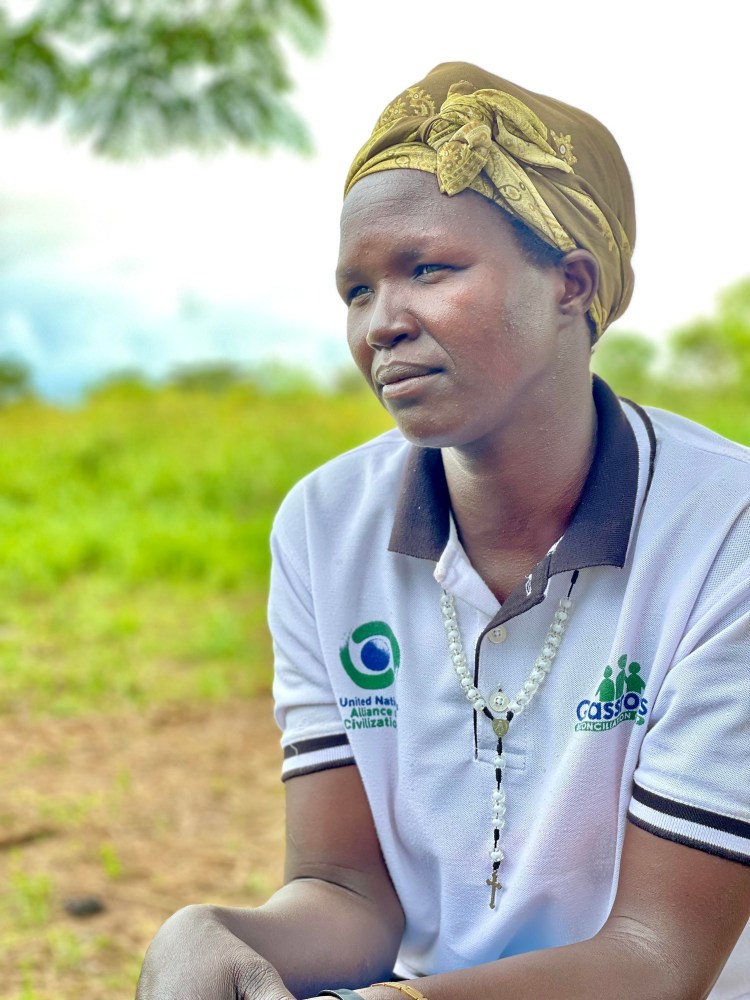
Betty was abducted by the LRA rebels at age 13 and raped before getting her first period. She was forced to be a child soldier and sex slave to a commander for 9 years. She finally escaped but had to hide among dead bodies to conceal herself, further traumatizing her. “It haunts me to this day, and I’m still not able to conceive,” she said.
Betty was on the verge of suicide when she joined a GRG trauma counseling project in which 40 former former child soldiers like her are receiving counseling and becoming counselors themselves.
“But now I’ve become a trauma counselor with GRG. It has made me feel special,” she said.
“Becoming a counselor has given me perspective, and now I can relate to other people with the same trauma and help them. I’m also farming with the GRG group. We also sing and dance together. I’m getting used to seeing things from a different perspective,” she said.
Read more about Betty’s story.
Training peer counsellors
In 2024 GRG hired a full-time trauma counselor, and we have begun training over 50 peer counsellors in post-conflict villages on the Uganda-South Sudan border. These peer counselors are being equipped with tools to help groups support their members who suffer with mental illness and trauma. These peer counselors will be supported to connect with available government and civil society resources and mental health service providers to identify and treat people affected by trauma and other enduring effects of the war.
Mobile counseling center
It is been our dream for years to create a trauma counseling center to serve many more survivors of war. The former child soldiers and war survivors we serve have severe trauma. They were forced to commit atrocities by the Lord’s Resistance Army (LRA) rebels, from killing their neighbors and family members to witnessing friends being killed.
We now want to build on that success and take it to the next level. A mobile trauma counseling center will enable us to do that. The center will help us:
- Reach the most vulnerable people. The most traumatized people have difficulty leaving their villages, so the mobile center will provide counseling very close to where they live.
- Train community trauma counselors. We will be able to train local caregivers in trauma healing and counseling, who are the first point of contact for people with PTSD in communities.
We decided to create a mobile center rather than building a permanent structure because a) otherwise the most remote, neediest people wouldn’t be able to get help; b) it saves on costs.
 Grassroots Reconciliation Group