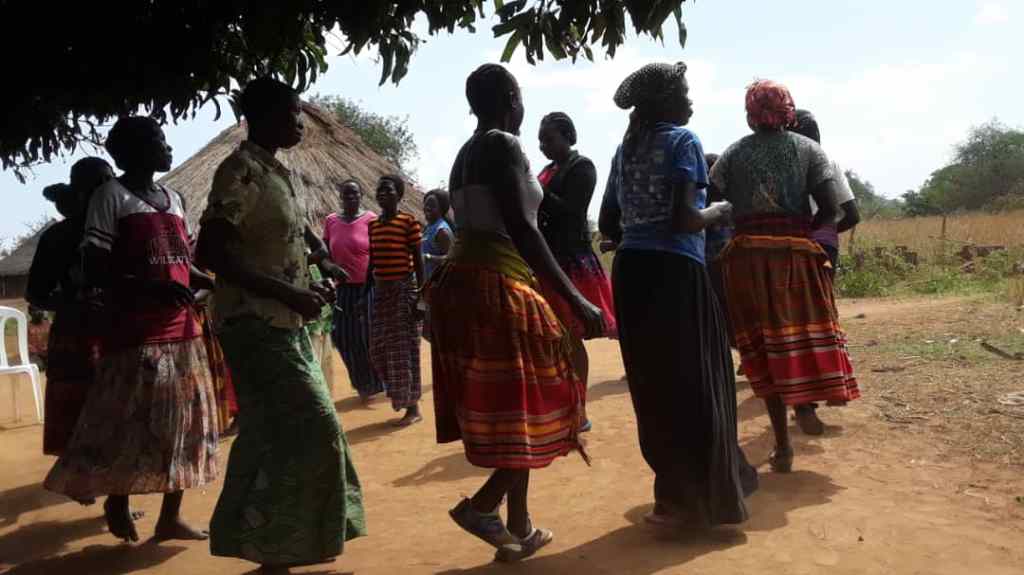
The number of women in GRG projects.
History
Grassroots Reconciliation Group’s (GRG) history begins in 2005. GRG started as the Grassroots Program, part of a USAID-funded program on reconciliation, the Northern Uganda Peace Initiative. GRG co-founders Sasha Lezhnev and Kasper Agger and GRG staff James Latigo and Othniel Oyo were all involved in the initial implementation of the USAID program.
After three years, USAID’s contract with NUPI ended as planned, but northern Ugandan participants in the Grassroots Program wanted to continue the initiative: they were enthusiastic about the hope it was bringing to this war-torn area. Sasha and Kasper saw the program’s successes and potential for healing these communities, and the need to adddress reconciliation beyond one-time conflict resolution sensitizations or short stays for former child soldiers in reception centers.
In March 2007, Sasha and Kasper, working with community leaders in Uganda, founded GRG to address this critical need. With great dedication and a firm belief in the cause, they decided to personally fund the organization. They assembled a dedicated board of directors who are convinced of the GRG’s positive role in fostering peace in the region. GRG’s board brings expertise and commitment to northern Uganda and to peace and reconciliation efforts. In July 2007, GRG received U.S. 501(c)(3) non-profit organization status and status as an NGO in Uganda.
Since then, GRG has grown in communities across northern Uganda, now working with over 400 people in building hope. Our projects are deliberately inclusive – working with former child soldiers, women, youth, and the elderly – so that no group is stigmatized, and that the foundations for peace-building and reconciliation are built successfully. As long as the needs continue, we plan to continue to expand and graduate GRG groups over the coming years.
Latest News
Jan 19, 2010
Jan 19, 2010
The annual cost of the war in northern Uganda.
The number of arrest warrants for crimes against humanity and war crimes issued by the International Criminal Court against LRA leaders.
The main target age for LRA abductions.
Number of 13 to 16-year-old girls abducted in a raid of an all-girls school and given to LRA commanders as "wives".
The odds that a northern Ugandan boy or young man was abducted by rebels.
The first age at which a child becomes vulnerable to abduction by the LRA.
The current number of GRG micro-loan projects.
The average daily income for a northern Ugandan youth.
The odds that a northern Ugandan girl or woman was abducted by rebels.
The number of former child soldiers and ex-combatants in GRG projects.
The percentage of LRA commanders who have had more than five forced wives.
The number of participants in GRG programs.
The current number of GRG group farming projects.
The rate at which babies die before their first birthday in northern Uganda.
The percentage of GRG’s expenditures that go directly to programs in Uganda.
The number of years that war has persisted in northern Uganda.
The number of people who lost their homes at height of northern Uganda’s war.
The chance that an individual abducted by the LRA will not return home.
The number of youth and children abducted by LRA rebels in northern Uganda, many of whom were forced to kill.
The number of communities with current GRG projects.
The current number of GRG brick-making projects.
